Our Lady of the Rocks is the only island in the bay that nature did not make: sailors have been adding stone to it since 1452. Perast beside it is sixteen baroque palaces and a bell tower along one waterfront. From the water you see both the way the shore never shows them — the island can be circled, and the town reads whole instead of in pieces between bends in the road. Here is what there is to see, how mooring works, and why that one hour at the quay decides more than it sounds like.

What Our Lady of the Rocks actually is
The island is man-made. The story starts with an icon found on a reef, and sailors have been bringing stone out to it since 1452. Inside stands a baroque church: Renaissance paintings, hundreds of silver votive plaques left by men who came home from a voyage, and a small museum.
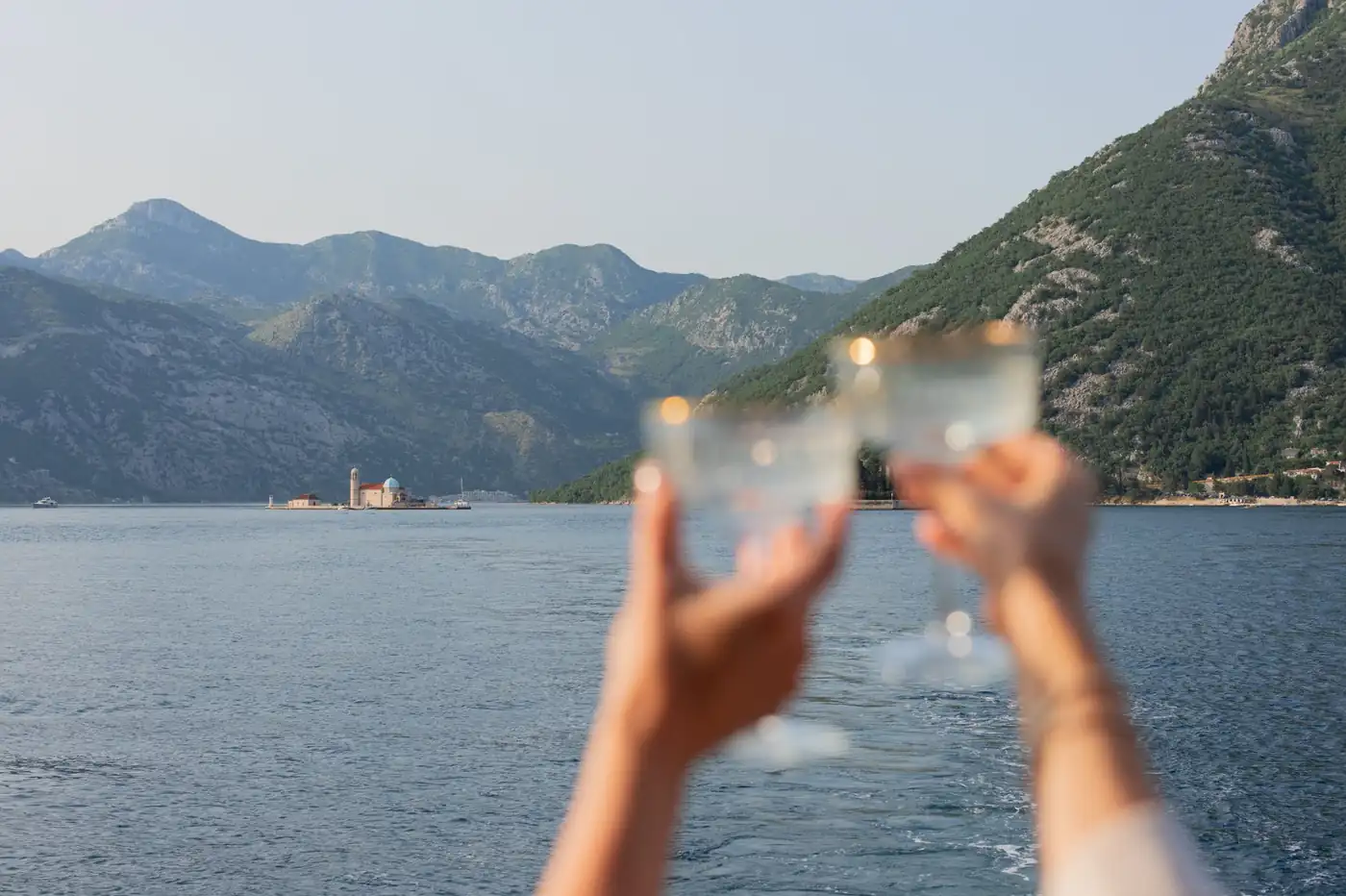
The water around it is clear enough to see the bottom at ten metres. Circling the island takes a few minutes, and it is from the water that you grasp how small it is: the whole thing fits in one frame together with the mountains on both sides of the bay.
Perast: an hour on the waterfront
Perast is the most photogenic baroque village on this coast — sixteen palaces and bell towers standing at the water's edge. Mooring is usually about an hour. That covers the waterfront, the climb to the bell tower and a coffee by the sea, and gets you back aboard before the day turns into a rush.
You can also stay put. At the waterside restaurants in Perast and Stoliv the owner rows out to take your order and the food comes to the boat. The same works off Prčanj. Kamenari is its own case: oysters are ordered straight from the water and the farm brings them to the yacht.

The swim just past Perast
Immediately past the town there is a sheltered cove of turquoise water where the bottom is visible at fifteen metres. It is the first swim stop on almost any route deeper into the bay — paddleboards, masks and the underwater scooter are on the swim platform.
The alternative is Morinj, a quiet bay under the mountains. Springs keep the water colder there, the boats are noticeably fewer, and in June the smell of lavender and thyme comes down off the slopes.
What the road does not show you
This is the part worth arriving by water for. From the road Perast comes in fragments: bends, trees, parapet. From the water the sixteen palaces and the bell tower line up as one, and both islands land in a single frame — Our Lady of the Rocks and its neighbour behind it.
| What you look at | From the shore | From the water |
|---|---|---|
| The Perast panorama | fragments between bends | the whole waterfront in one line |
| Our Lady of the Rocks | from the jetty and shuttle boat | a full circle, bottom at 10 m |
| Both islands together | barely line up | in a single frame |
| Swimming nearby | town jetties | the cove past Perast, bottom at 15 m |
| Lunch | a table and a queue | the order delivered to the boat |
When it is quiet here
What matters is not the season in general but the hour and the month. In June you can still sit down at a waterfront table in Perast without a reservation. In July and August restaurants often run full and quay space goes faster. After the twentieth of September the coast empties out noticeably.
An early start outside the peak deserves its own mention: in spring and autumn Perast in the early morning is close to empty. This is not about fewer tourists in general — it is about ninety minutes when the waterfront is yours and the water stands like glass. The month-by-month breakdown is in our season guide.
How many hours to allow for the route deeper into the bay, and what fits into four, six and eight of them, is covered separately in our hour-by-hour route. Prices and terms are on the Kotor boat rental page.


Who this route suits
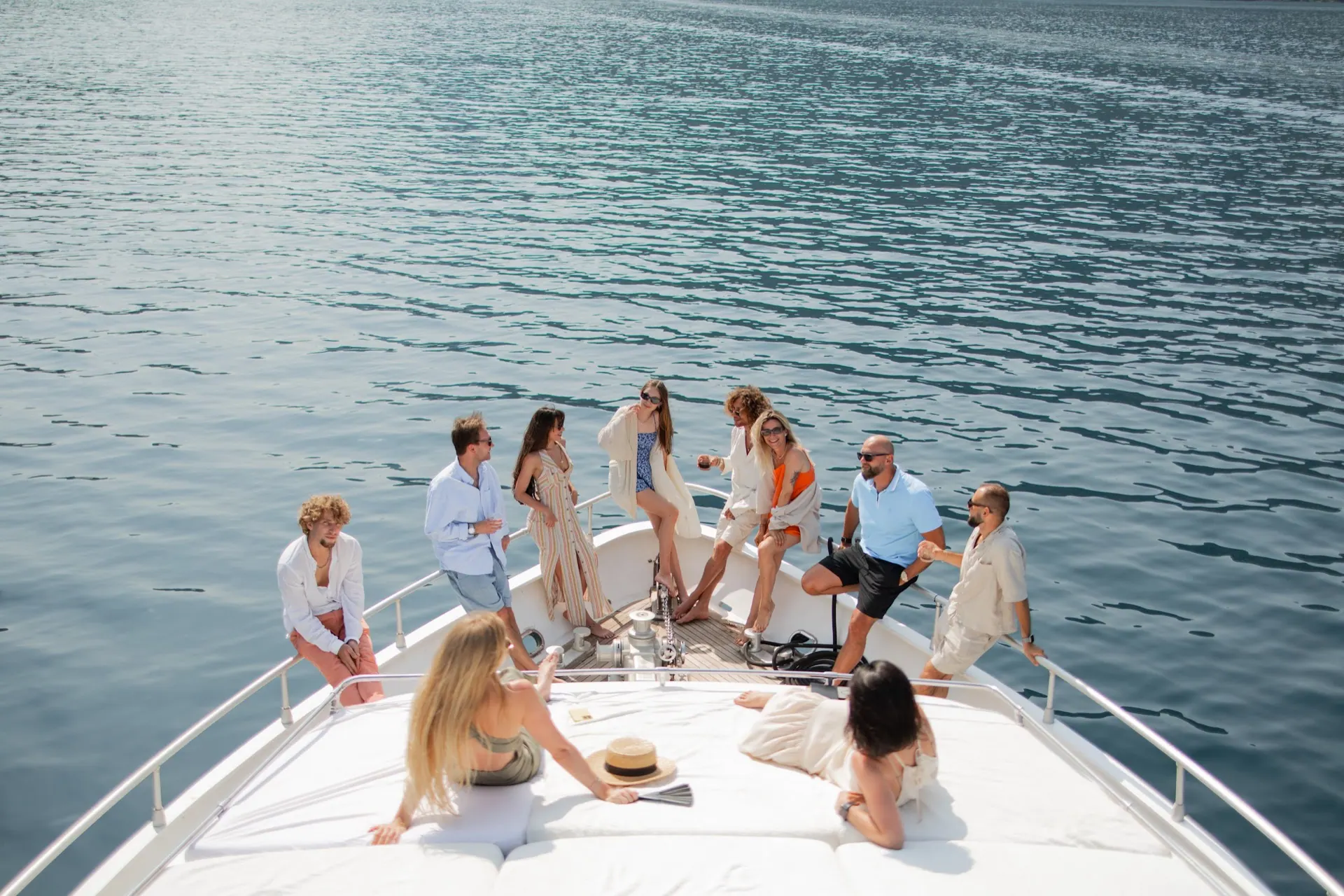
The run is even: no open sea, no long passages, one short mooring in the middle. That is why people bring children and parents on it — there is almost no motion, and there is plenty to do on the water between stops.
If you want not only to see it but to spend the whole day slowly, the route extends into a full day with lunch at anchor and a return past the islands. How that works over two and three days is in our piece on overnight charters.
Send your dates and how many you are. We will price the route with Perast in it and tell you which hours the quay is easier.
Frequently asked questions
A man-made island in the middle of the bay: sailors have been adding stone to it since 1452. It carries a baroque church with Renaissance paintings, hundreds of silver votive plaques and a small museum. The water around it is clear enough to see the bottom at ten metres.
Yes, usually for about an hour, which covers the waterfront, the climb to the bell tower and a coffee by the sea. Then the route continues. In July and August quay space goes faster, so the captain picks the mooring hour by what he sees.
From the road Perast comes in fragments, broken up by bends and trees. From the water the sixteen palaces and the bell tower read as one line, and both islands sit in a single frame. That angle simply does not exist from the shore.
Just past Perast there is a sheltered cove of turquoise water where the bottom is visible at fifteen metres. The other option is Morinj under the mountains, where springs keep the water colder and there are noticeably fewer boats. Paddleboards, masks and the underwater scooter are aboard.